7 July 2019
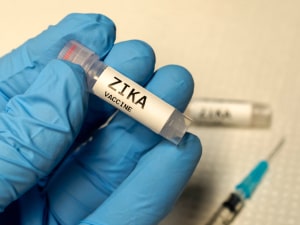
A new article published in the journal Frontiers in Cellular and Infection Microbiology shows that research built around human-mimetic tools are more likely to succeed in the search for effective treatments for and prevention of flavivirus infection as compared to research using monkeys or other animals as laboratory models. The study, led by Dr. David Pamies at the University of Lausanne (formerly of the Johns Hopkins Center for Alternatives to Animal Testing), with researchers at Johns Hopkins University and the National Institute of Allergy and Infectious Diseases’ Vaccines Research Center in the U.S., carried out a comprehensive review of the models used to study deadly mosquito-borne flaviviruses (MBF) such as dengue fever and the Zika virus, known to cause neurological disease in humans.
The authors report that the host specificity of viral diseases presents a challenge for studying these human viruses in animals. Vaccines that had proved successful in primate tests have failed in human trials, leading to intense research using knockout and humanized transgenic mice. Thus, human genes relevant to the capacity of the virus to infect humans have been inserted into mice, but these modified animals are still mice, and the authors recognize drawbacks to this approach: “… several factors are recognized to influence the susceptibility of mice to MBF infection that limit applicability to humans.” For example, mice fail to display human disease symptoms if bitten by an infected mosquito (the human route of infection), and the mouse immune response varies depending on the animal’s age. Furthermore, the experiments are not reproducible in different laboratories – often an issue in animal experiments. [Read more…]
 Korea’s first-ever public forum to discuss replacing animal use in science will be hosted in Seoul at the National Assembly on May 30. Organized by Humane Society International (HSI) and Korean lawyers’ group People for Non-Human Rights (PNR), the forum is co-hosted by members of National Assembly – In-soon Nam, Kyungmi Park, Wanju Park, Seong-gon Wi, Sangmin Lee and the Assembly’s 4th Industrial Revolution Forum.
 The
The 
 Every day we come across innovative, intelligent studies that do not rely on animals to investigate human diseases and that instead find efficient and cost-effective solutions in biomedical research that are human-focused. In this edition of Research Round-up we highlight three papers from scientists who have developed novel human-focused models to mimic the oral mucosa as well as to study diabetes and renal disease.